
Record the complete identity
Photograph the nameplate straight on, in good light. Transcribe every part of the model code, including spaces, leading zeros and suffixes. Record a serial or date code separately: it may help trace the unit but is not necessarily a configuration code.
Keep the equipment make, model and hydraulic function with the pump information. If the plate is damaged, mark unreadable characters rather than replacing them with a guess.
Record the installation
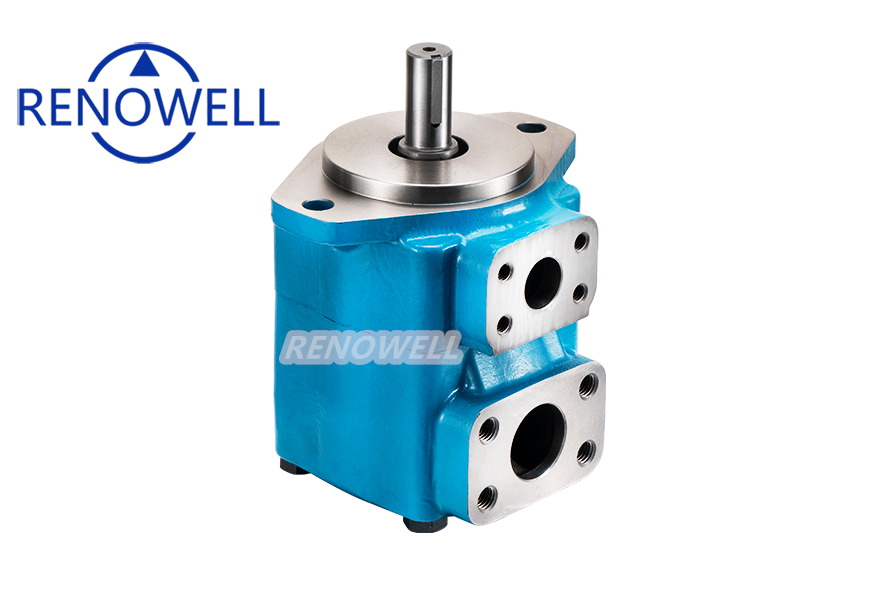
Collect photographs of the shaft end, mounting flange, ports and full assembly. Include the dimensioned drawing where available. Shaft profile, pilot, bolt pattern, port threads and port orientation are separate checks; a matching series name does not confirm them.
For rotation, state the viewing direction used in the applicable drawing or documentation. For multi-section pumps, identify each pumping section and outlet rather than quoting only the first section code.
Describe the operating duty
Include operating speed, pressure requirements, fluid specification and the equipment’s duty cycle. Explain whether this is a planned replacement, a failed unit or a change to the machine. Symptoms can originate elsewhere in the circuit and may remain after replacement.
Include quantity if known, destination and inspection requirements. Before ordering, confirm the proposed configuration and any unclear connections; photos and a matching name are not enough.
References & further reading
Renowell — replacement and repair support ↗Parker — Hydraulic Pump Basics ↗For operating limits and service procedures, use the document for your exact pump and machine.