
RENOWELL HYDRAULICS
Hydraulic technical resources
Pump operation, calculations, replacement checks and datasheet reading for equipment buyers and maintenance teams.
START HERE
What does a hydraulic pump actually do?
See how the rotor and vanes move oil, how flow differs from pressure, and where the pump fits in the circuit.
Read the introduction ›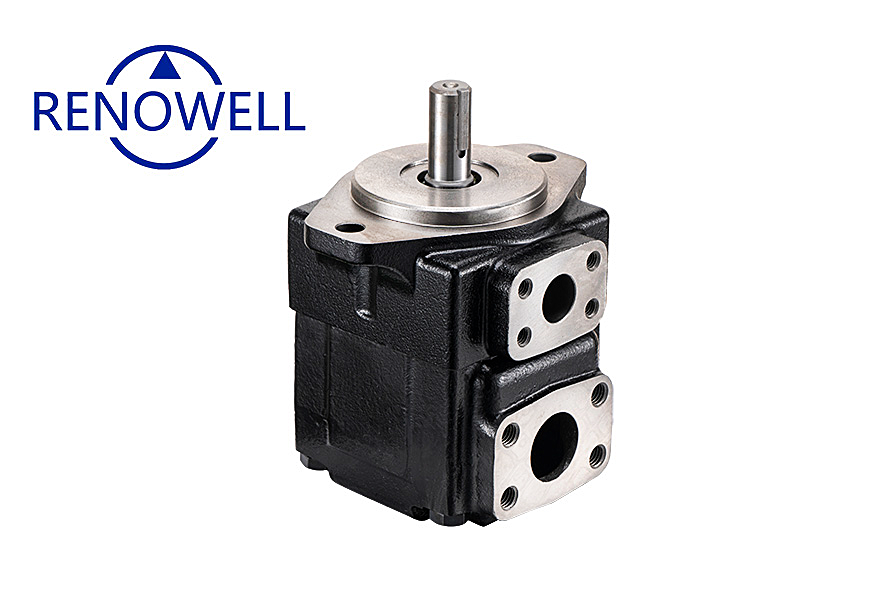
8 guides
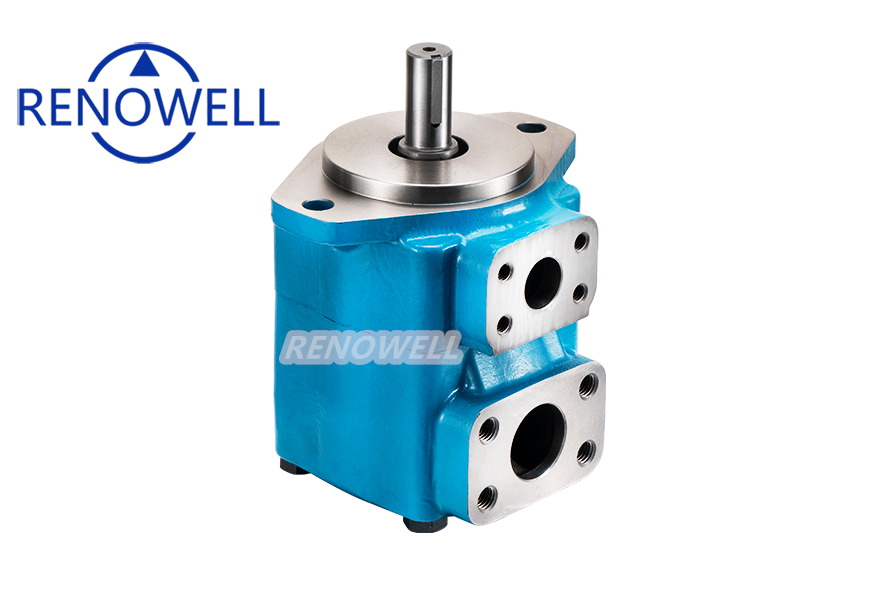
Identify a pump before ordering a replacement
To identify a replacement hydraulic pump, collect the complete model code, nameplate photo, shaft and flange details, port connections, rotation and operating duty. A matching series name alone does not confirm interchangeability.
Read guide ›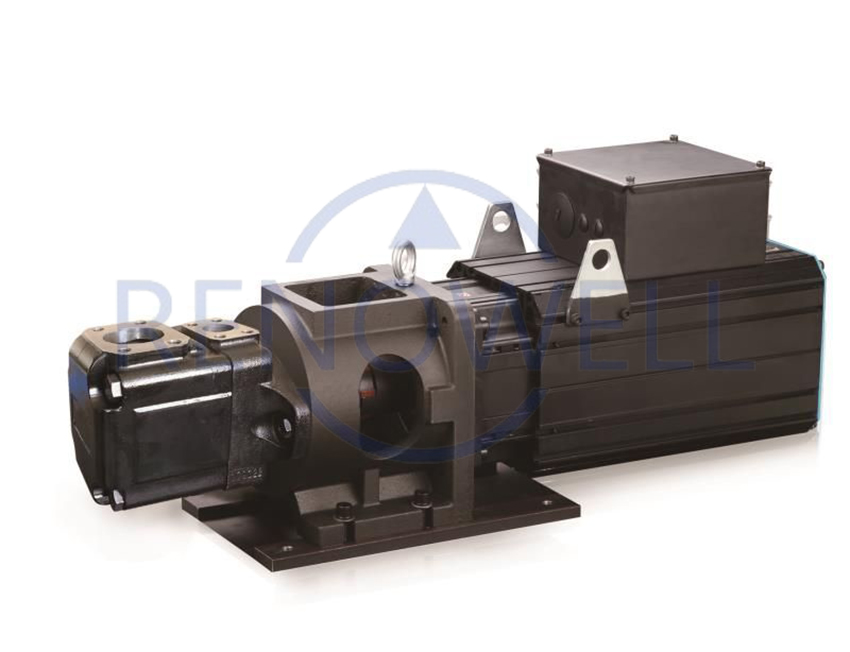
Prepare a hydraulic pump specification
A hydraulic pump specification combines the required flow and pressure at each machine stage with shaft speed, fluid and installation details. Include simultaneous functions, quantity and required documents so the proposed configuration can be checked.
Read guide ›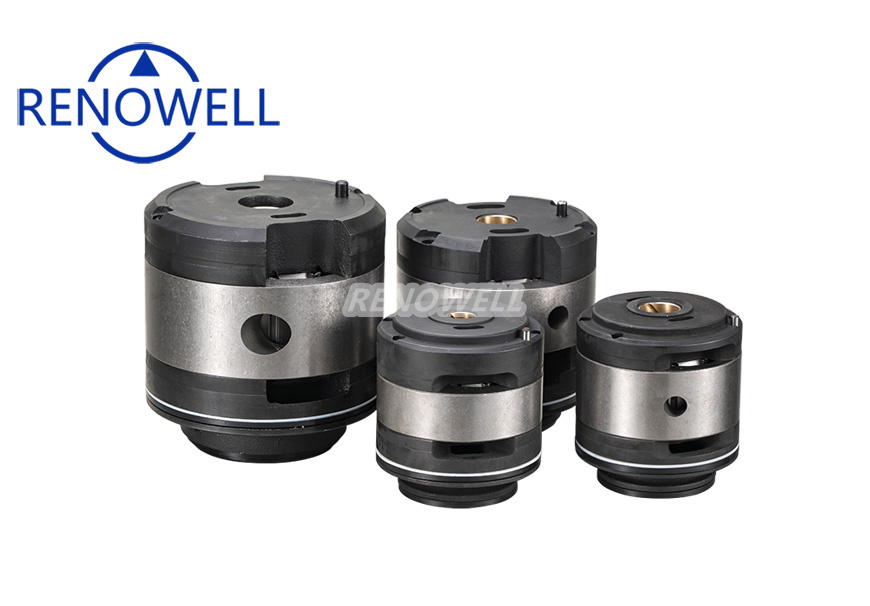
How does a hydraulic pump work?
A hydraulic pump converts mechanical shaft power into fluid flow. Pressure develops as the circuit encounters resistance from the load. Valves direct the flow to cylinders or motors, which turn hydraulic power into machine movement.
Read guide ›Vane, gear and piston pumps: what is different?
Gear pumps move fluid around rotating gears, vane pumps use chambers formed by a rotor and moving vanes, and piston pumps use reciprocating pistons. Choose between specific models using their operating limits and the machine requirements.
Read guide ›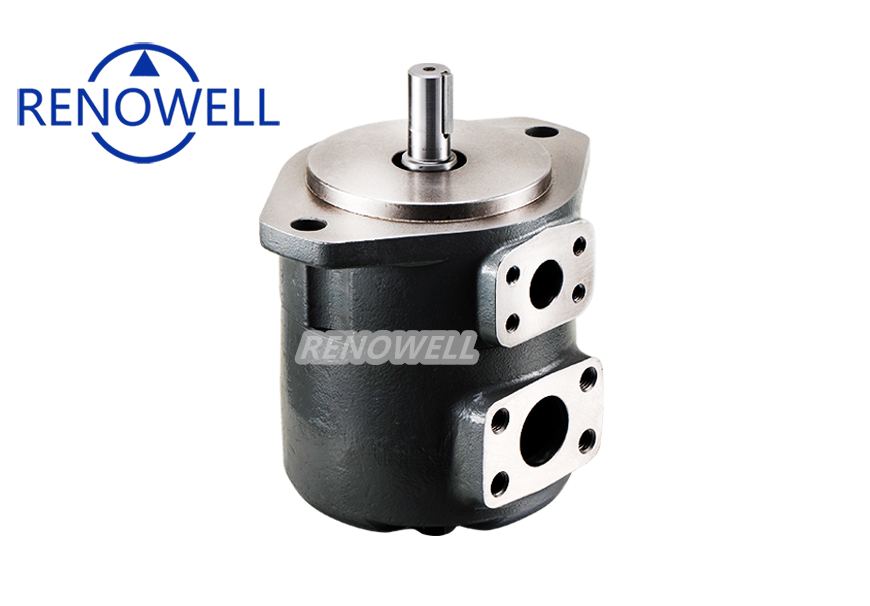
Displacement, speed and flow explained
Theoretical pump flow in L/min equals displacement in cm³/rev multiplied by shaft speed in rpm, divided by 1,000. Multiply theoretical flow by volumetric efficiency to estimate delivered flow at a stated operating condition.
Read guide ›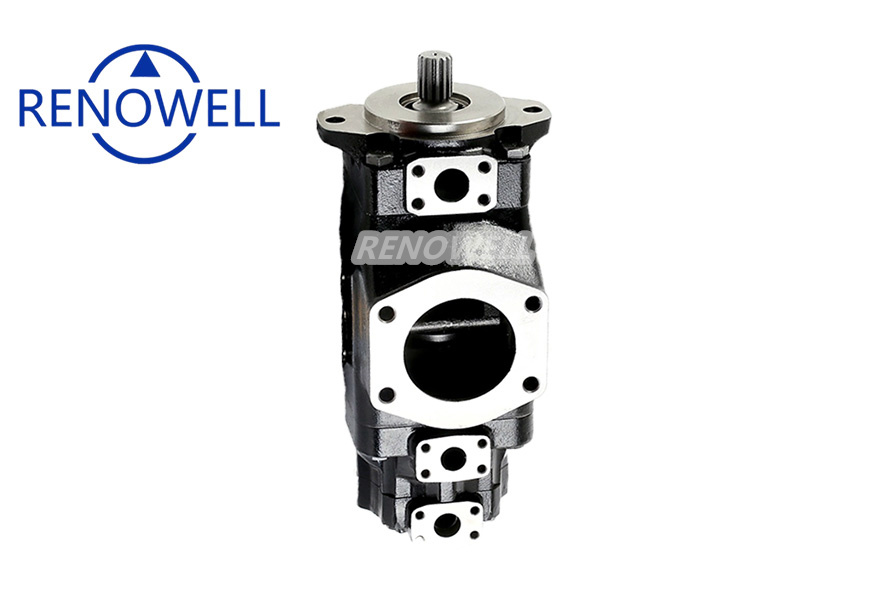
Single, double and triple pumps
How to specify the sections, outlets and operating duties of a multi-section pump.
Read guide ›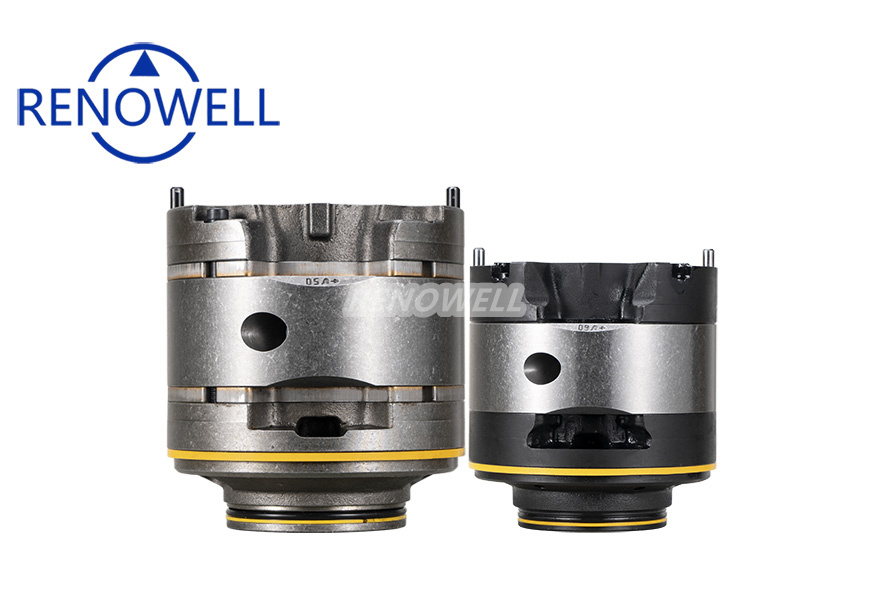
Noise, heat or low flow: what information should you collect?
What to record when a hydraulic system develops noise, heat or reduced flow.
Read guide ›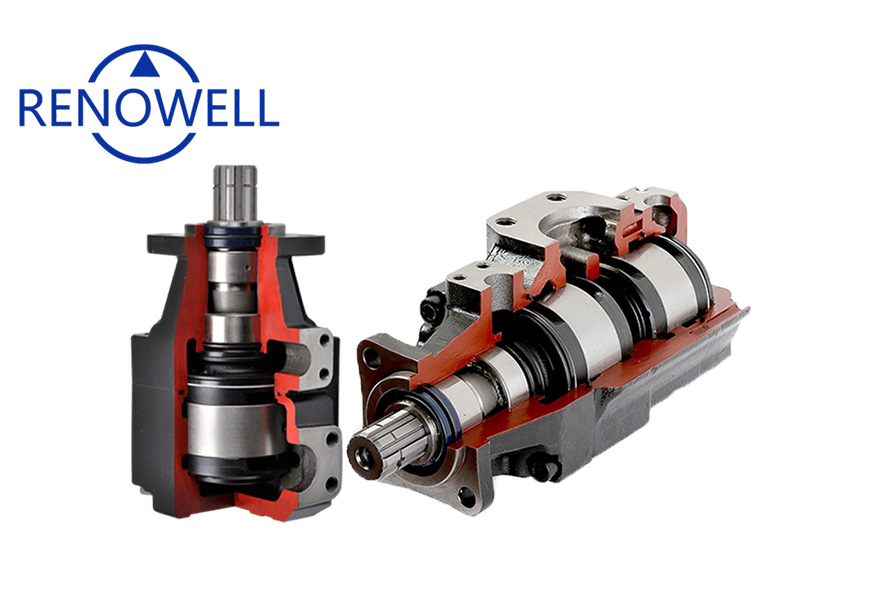
How to read a pump datasheet
Find the model code, operating limits and installation dimensions in a pump catalog.
Read guide ›Common hydraulic terms
- Displacement
- Nominal fluid volume moved by the pump per shaft revolution, usually expressed in cm³/rev.
- Flow rate
- Fluid volume per unit of time, commonly expressed in L/min.
- Pressure
- Force per unit area. Common hydraulic units include bar and MPa.
- Volumetric efficiency
- Delivered flow divided by theoretical flow at a stated operating condition.
- Duty cycle
- The sequence of operating conditions and the time spent in each stage.
- Mounting interface
- The physical connection between pump and equipment, including flange, pilot and shaft details.
Talk to Renowell about your next pump
New equipment, repeat orders or a replacement. Send us your requirements.